top of page
There's plenty to see and do at the estuary.
The estuary walkway provides beautiful views, and there are signs along the way providing information about some of the birds you might see.
There is a lot of interesting wildlife at the estuary. As well as birds, the estuary is also home to some interesting plants and is an important habitat for native fish.
The Manawatū Estuary Trust enjoys giving people the opportunity to learn more about this amazing environ


In June 2026 a two day hui was held to discuss a national project to improve Īnanga stocks, not only to increase the population of this threatened species but to ensure populations are maintained to provide a sustainable cultural and recreational harvest. It is in no way aiming to be detrimental to Whitebaiters, quite the contrary as the depth of knowledge built up over the years can only be of benefit to all, to not only preserve stock but to improve populations. Whitebait is a taonga (treasure) species to Maori and is of cultural significance.
Historically, the stretch of Whitebait Creek at Foxton Beach between Seabury Avenue and the paddock to the South, adjacent to Flagstaff Street has long been known as a spawning area for Īnanga, the most abundant of the 5 Galaxiid species making up around 95% of the catch. There had been no surveys done since 2013-15 and it was not known if it was still used. The two day hui included a field trip to the Creek and it was during that time that eggs were found.
Currently, a team are involved in creating a plan to enhance the area as a spawning site and it must be pointed out that it will not interfere with whitebaiting activities and will centre around monitoring at low tide, pest plant and animal removal, and other none intrusive activities during the season while educational material is being created.
Content will be added as it become available.
PEST PLANTS
The whole area of Foxton Beach has numerous pest species and great effort is put into trying to control these noxious plants. Several are dominant around the creek with the two pictured below being the most prominent. These will gradually be removed and replaced with natives.
This species is one of the most invasive, mainly because of the mass of seed it produces. While mature plants will be removed over time, seedlings will continually appear and these can be pulled up quite easily. Check for elongated leaves (pictured on the right) with veins radiating from the base

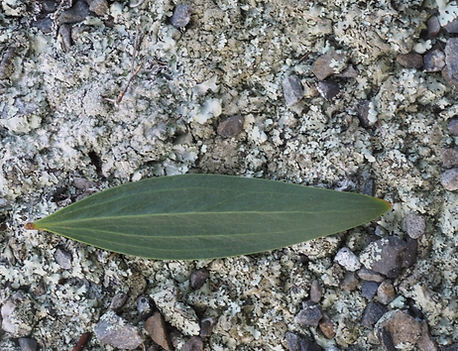
Tree Lupins are a constant problem, sprouting up at any time of the year. Mature plants are being removed but keep an eye out of seedling which have fairly distinctive leaves and pull out. No need to take off site, just drop where they were pulled up from.


Pest Plants
SCIENCE AND EDUCATION
This section will eventually be divided into categories once more references and educational material become available but it already contains much interesting and informative information. Please take a look.
Īnanga lifecycle poster
Īnanga: What does science tell us about New Zealands' migratory galaxiids.
Always be Naturing. Spring 2026 Newsletter. Love Zones. Department of Conservation.
National Īnanga Spawning Programme (2025). Introduction. Mountains to Sea Conservation Trust, Whangārei, Northland, New Zealand.
National Īnanga Spawning Programme (2025). User Manual. Mountains to Sea Conservation Trust, Whangārei, Northland, New Zealand.
Science/Education
WATER QUALITY
Land, Air, Water Aotearoa (LAWA) monitors water quality throughout Aotearoa New Zealand and has an automatic monitoring unit on Flagstaff Street but the heading for the LAWA website is given as Edinburgh Street.
A snapshot of the data relating to Whitebait Creek is given below. By opening the link or scanning the QR code the appropriate page will open and by clicking on a section a more detailed analysis can be easily accessed.


Water Quality
bottom of page